Photo gallery
Credits
A film by: Eyal Sivan
Featuring: Gershom von Chwarz (German architect and sculptor), Avi Metodi (Israeli machine operator), Abou Khadit (Palestinian worker), Joseph (night watchman), Khamis (Palestinian worker)
Producer: Edgar Tenembaum
Author: Eyal Sivan
Director of Photography: Emmanuel Kadosh
Sound Engineer: Elie Taragan
Chief Editor: Sylvie Pontoizeau
Press (excerpts)
“An uncompromising surrealist metaphor.” — Le Monde
“Through his films, Sivan wants to make things move (…) Israland sheds light on the causes of the Israeli-Arab conflict better than any news report could. That is the strength of the documentary, and the result of the quality of listening of a filmmaker working for peace.” — France Soir
“A surrealist metaphor, a poem with real-life sources, Israland is a work of profound humanity.” — L'Humanité Dimanche
“A funny film, which shows with a light touch the grave and explosive reality of Israel. A philosophical tale with the air of a surrealist fable.” — Télérama
“To crude words and shocking photos, Eyal Sivan prefers images that give one pause to reflect.” — Télé Pro
About the film
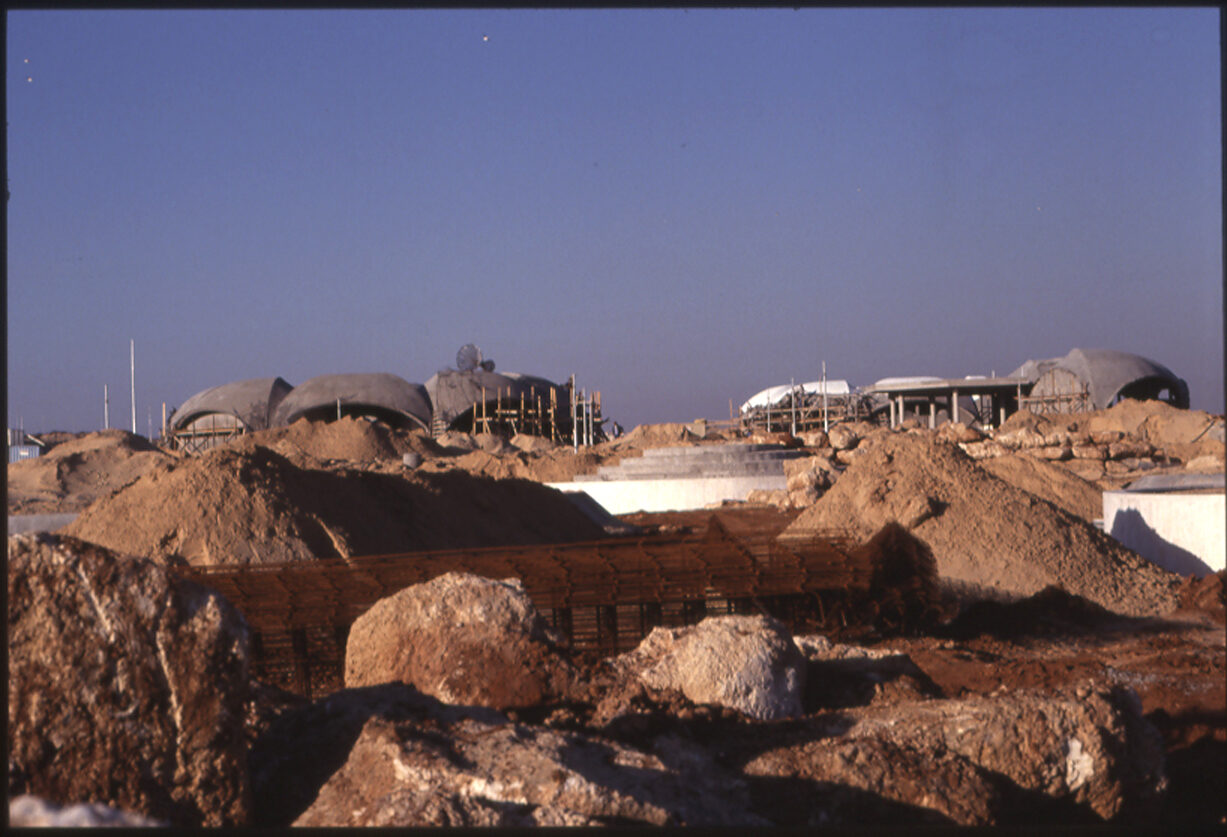
Israland is a mosaic of several antagonistic characters. Their only common denominator is their workplace: the construction site.
Joseph, the night watchman, sitting on a pile of sand, listens to and comments on the news on the radio.
"There are accidents worse than the war… We're not afraid…"
Avi, an Israeli machine operator, talks about the war and hatred; he has no contact with the Arabs on the site.
"I understood that we had to do our utmost for our country, to try to build it ourselves, without the Arabs. We mustn't let them do anything. Let them stay home."
Abou Khadit and Abou Ramzi, Palestinian workers, talk about their schedules and the hatred of the Israelis.
"…Often, after a day on the site, I find the house full of tear gas…"
"…The Jewish worker can do nothing for me, because we're in the same boat — he too has to work to earn his living, so it's not up to him to defend my rights."
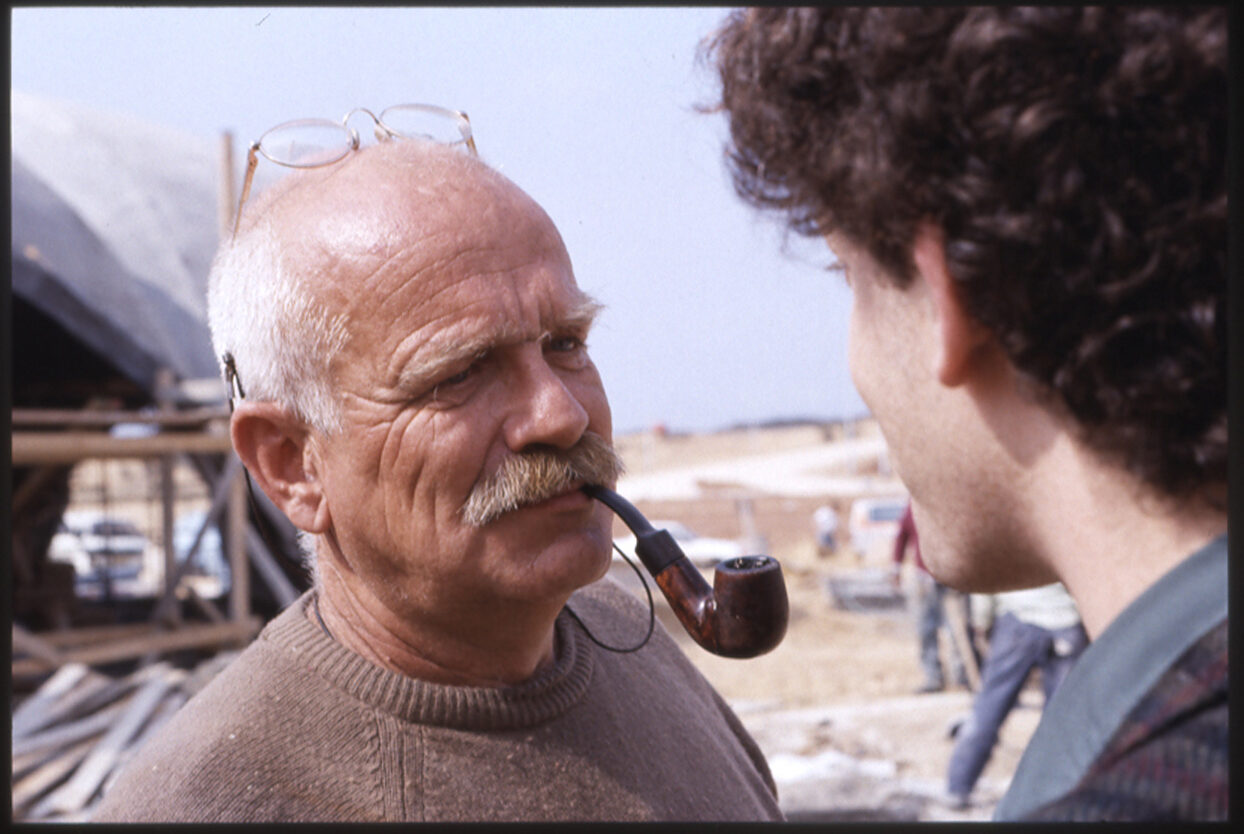
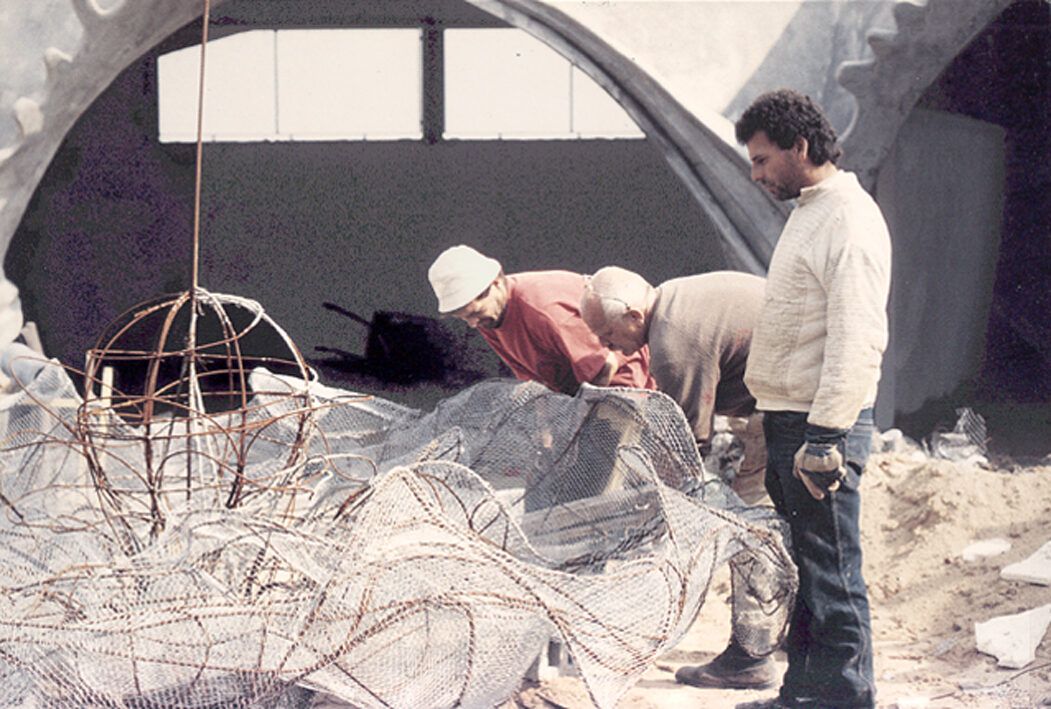
Guershom, the architect, a German convert to Judaism who became Israeli, designs the sculptures and analyses the situation as though he weren't really part of the reality.
"This whole country is nothing but one vast American-style Luna Park; as long as we keep fooling around, wanting to imitate America, as long as we make no effort to be part of the Middle East, to fully integrate into it, it will be a catastrophe."
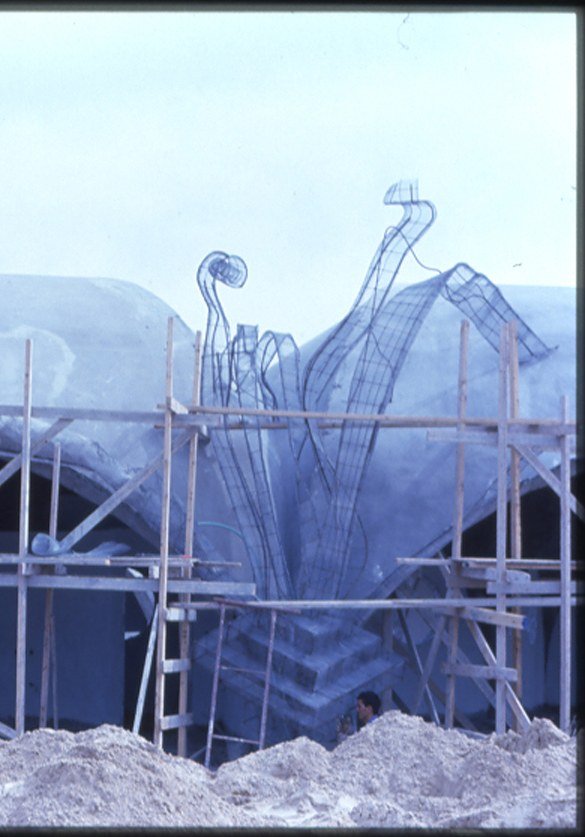
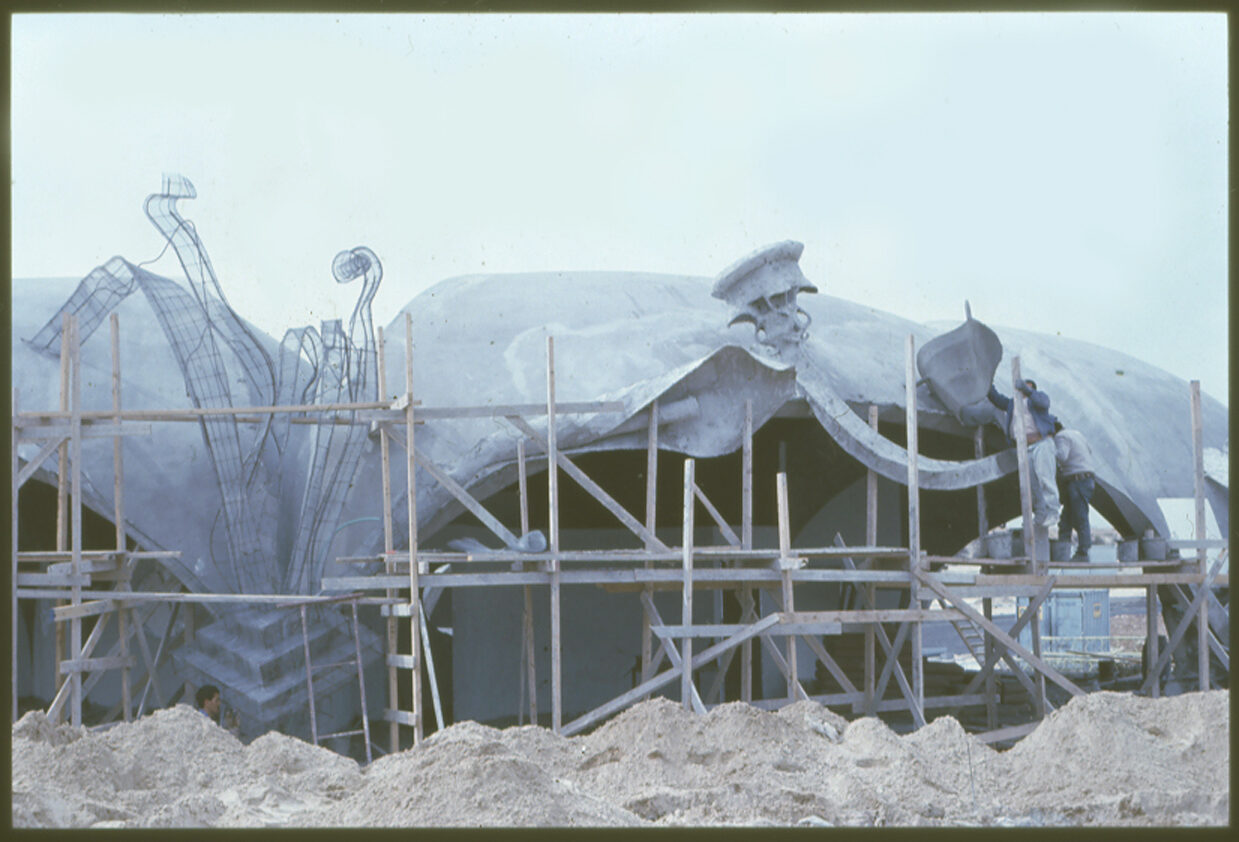
Khamis, the Palestinian worker, is busy building the metal sculptures shaped like flowers.
"…This fleshy rose is firmly anchored in the earth, more deeply than the others. Another thing: every time a petal is torn off by the wind, others appear, much sturdier than the last. One day the wind will no longer be able to break the petals, and our rose will come out into the sunlight like the other flowers planted right here…"
And Abraham the developer, a carefree man, a Georgian multimillionaire, who dreamed up this project. A Luna Park, an American-style amusement park, named Israland.
"Here we're building a paradise on earth, and believe me, I'll go to heaven for having built this paradise… We put in everything we've ever heard was in paradise. Flowers, gardens, landscapes, that's paradise. We're doing it, we're already building it in this world. American-style… maybe not American-style… I'd like us to be able to say Israeli-style — Israel is no less good than America."
The film Israland is a surrealist metaphor for Israel, or "Israel-Land," an enclave country: a Western enclave at the heart of the Middle East.
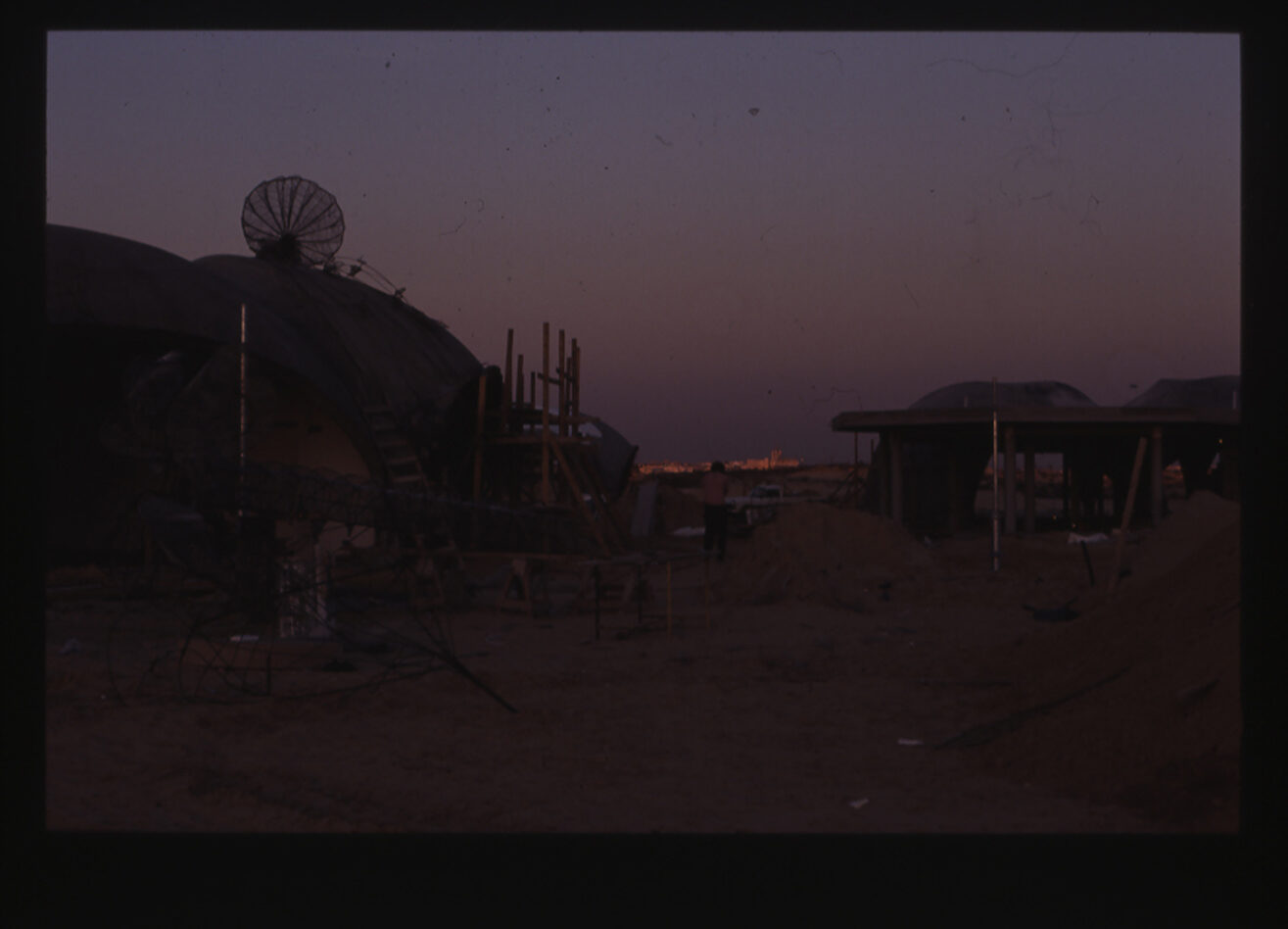
The film is finished, and so is the construction site. It opened its doors after the war under the name SUPERLAND.