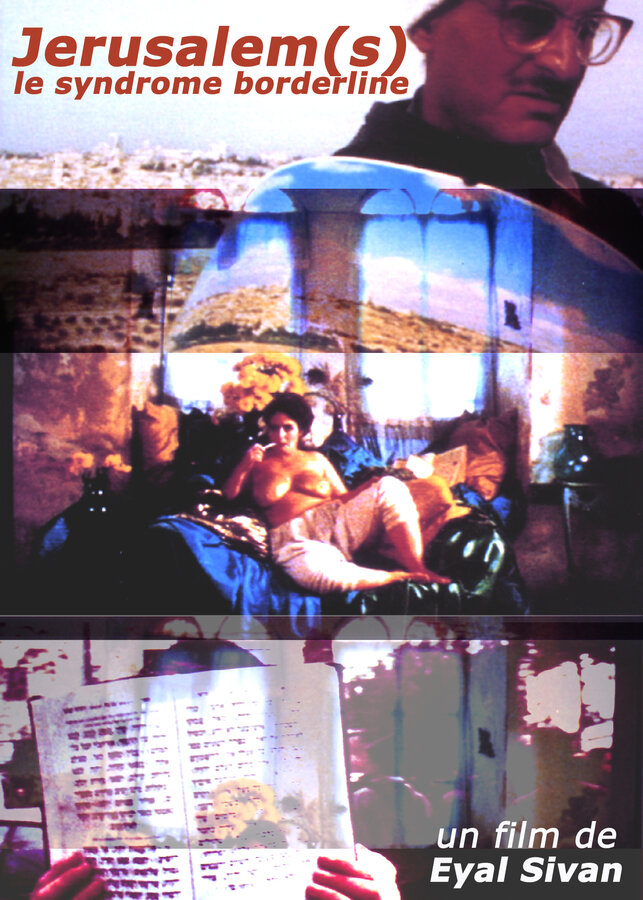
Photo gallery
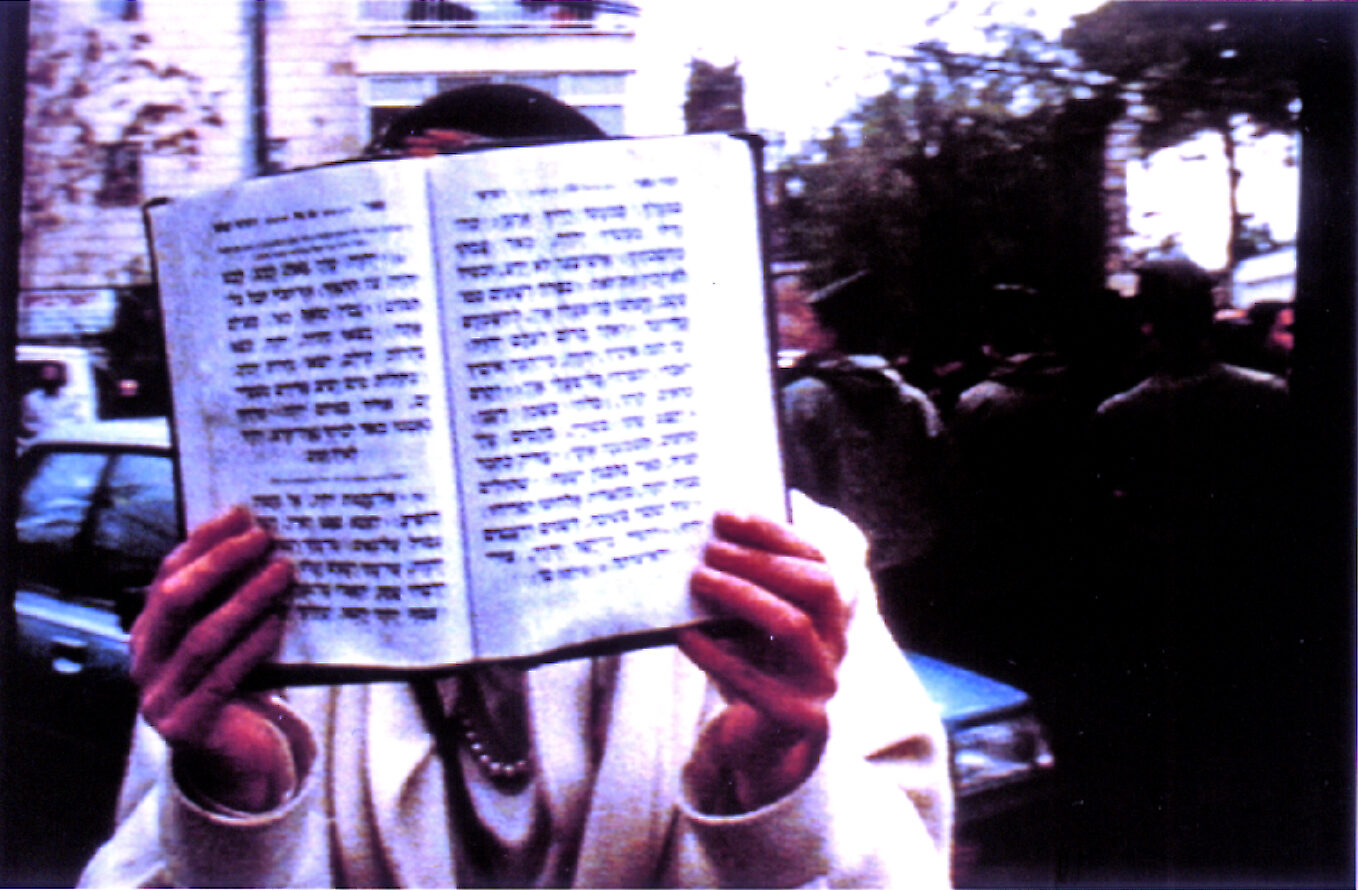
Credits
A film written and directed by: Eyal Sivan
With: Dan Dulberger, Amalia Sand, and Izak Konfino, Shay Laufer
Camera: Nurith Aviv
Sound: Rémy Attal
Editing: Sylvie Pontoizeau
Production management: Karin Sivan
Associate producer: Eyal Sivan
Assisted by: Armelle Laborie
2nd sound engineer: Amir Buverman
Set designer: Judie Loms
Associate producer: Amit Breuer
Production advisor: Michel Khleifi
With the participation of: Centre National de la Cinématographie
Press (excerpts)
“A violence and a tension tell us that we are indeed in Jerusalem.” — Nouvel Observateur
“An ironic metaphor around a city crushed by a mad destiny.” — Le Monde
“A violence and a tension that tell us that we are indeed in Jerusalem.” — Le Nouvel Observateur
“And from this slapdash style emerges more the director's accusing finger than his gaze.” — Télérama
“Jerusalems: a rather curious homage. (…) A film with a stance that is, to say the least, unusual (…),” — a metaphor hard to swallow for many viewers (…)
“Actualité Juive” — Eyal Sivan offers us tonight what is truly the evening's bravura piece, this JERUSALEMS, THE BORDERLINE SYNDROME. Let's say it right away: it is not with this docu-fiction that Eyal Sivan will improve his standing. Halfway between documentary and imaginative narrative, this strange and laconic film oscillates between poetic delirium and personal catharsis — which is to say one would be wrong to look here for any will toward objective rendering. (…) Sivan's Jerusalem is the object of a quest that is, if not insane in itself, at least intensely profaning. The rawness of Eyal Sivan's gaze will make more than one viewer shudder. His portrait of love and hatred, between attraction and repulsion, is worth the detour, if only because it takes the liberty of standing against the spiritually correct cliché of "holy city."
Tribune Juive
About the film
At the turn of the century, doctors reported a specific form of hysteria affecting pilgrims visiting the Holy City: "Jerusalem fever." This syndrome may well be the deep truth of this city.
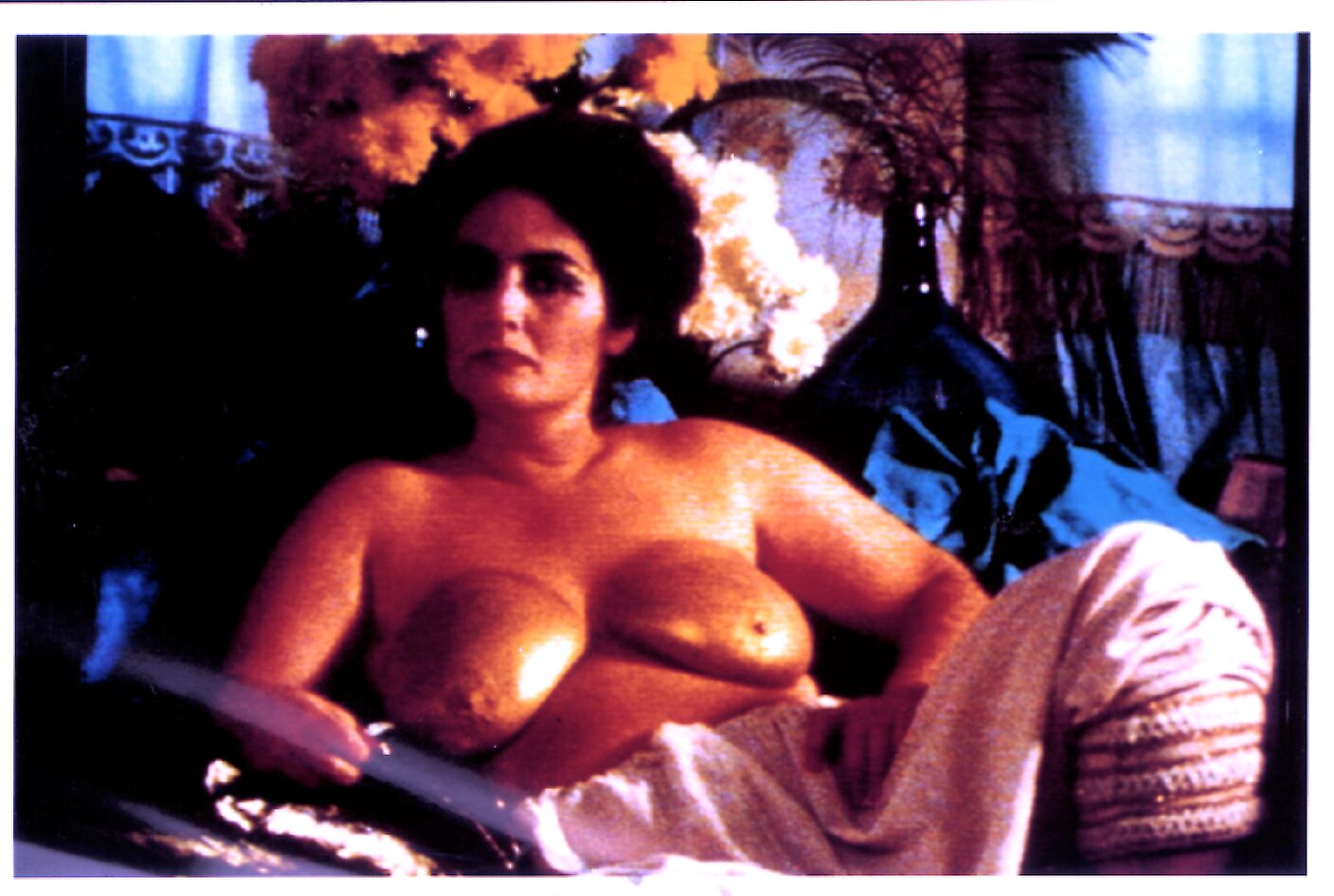
Jerusalem(s), Borderline Syndrome analyses the often irrational relationship that men and women can have with an object, an image, a symbol. At night, a child wanders the streets of Jerusalem, searching for a woman with golden breasts he once glimpsed.
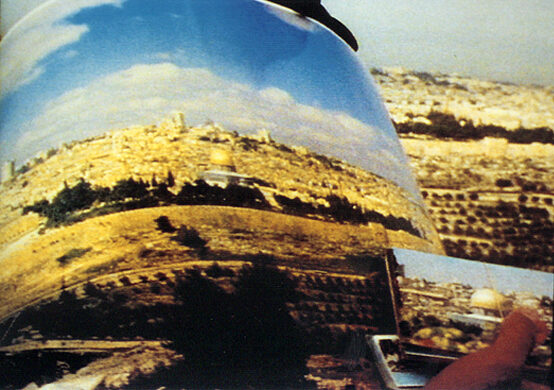
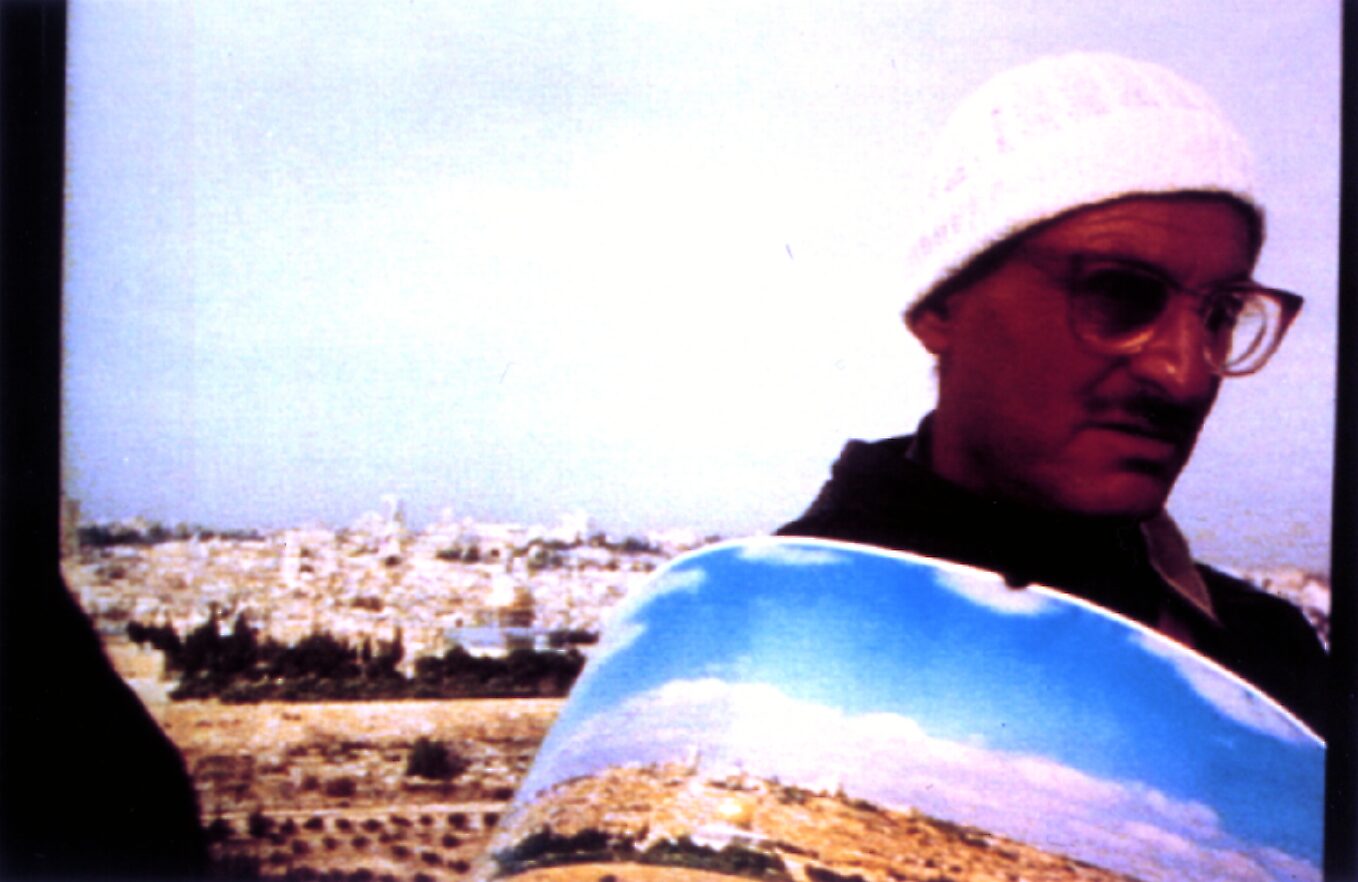
In parallel, the camera, a character in its own right, questions the everyday reality of a divided city. It runs up against invisible borders and, gripped by the anguish of filming what has already been seen a thousand and one times, tries — without really succeeding — to escape the Jerusalem syndrome.
Jerusalem Syndrome: a psychiatric syndrome, officially catalogued in the 19th century, which afflicts pilgrims and tourists in the holy city.
It is an iconoclastic film, between documentary and fiction, that probes from within an over-sanctified city. A myth for the fleeting population of tourists and pilgrims, a political stake for the permanent population — is Jerusalem nothing but a syndrome?
A camera roams the city in search of a new angle. In parallel, a boy wanders the streets at night and, one evening, discovers a prostitute with golden breasts.
The camera in turn falls victim to Jerusalem, of violent femininity, and object of a perverse and universal desire: fetishism.
A Few Notes on the Film… After Dan Dulberger
Every war invests a certain number of objects, signs, and places, and gives them an importance not necessarily proportional to their value, to their original use. Invested in this way, these fetishes become so many irrational vessels that attract and gather the obsessions and inevitable clashes between each generation of the parties in conflict.
Jerusalem has always been (in fantasy) the fetish at stake in the conflict opposing European and Middle Eastern cultures. As tensions resurface between the Muslim world and the (today Judeo-)Christian world, the expected role of the Jerusalem fetish is to reactivate its symbolic influence over the identity sensitivities, the aims, and the mutual differences of the contesting parties.
The Jerusalem fetish is made up of a dome, a wall, and a sepulchre. In these competing architectures is embodied the dynamic of their will to differentiate themselves, through the infantile fantasy of possessing a thing entirely for oneself. Jerusalem — and not the fetish — has completely disappeared behind the iconography of the "prize," a disputed object.
Within this framework, a documentary film about Jerusalem is in itself an impossibility. Aiming at an "authentic" image, in an existentialist sense, of what Jerusalem(s) "there" would be "outside of there," the film finds itself confronted with manufactured images. All that is left to it is to render an image of an image. Because it cannot pierce the glaze of the image, the distinction between image and reality escapes it. The inquiring gaze is constrained by the pre-existing image.
Confronted from the outset with a fetishistic representation, rather than a reality that would give rise to imagination, the camera can then only decompose it, de-fetishize it. The only freedom it possesses in such a situation lies in the act of un-framing the image, of tracing it back to its chaotic, primitive, fleeting source.
It is an act of liberation: reality is freed from the tyranny of the politicized image.
Jerusalem(s) is this effort.
The fantasized Jerusalem is founded on a feminine, maternal archetype — the dome is a breast. There is a constant violation of the symbol. The countless offspring of Jerusalem the prostitute come to her, flattering, each hoping to be recognized by her as her only son. None is the only child. She has been mother so many times… The living hold little meaning for her. Jerusalem is a necrocracy — a city of the dead. The legitimized site of an irrational catharsis for every religion.
Jerusalem's dual image — east/west — has in fact covered over its own referent. It is today impossible to form an impression of the city independently of this dual image. It controls the field of vision of the city — it camouflages the city itself. Scratch the surface covered by a golden glaze, and you will discover in-visibility.
"JERUSALEM(S)" by Eyal SIVAN
"An unprecedented air blows over the city of Jerusalem. For the first time in its bloody history, the City may soon deserve its mythical and, until now, fictional name of "Jerusalem, City of Peace." The political discourse about the City may give way to the gaze. Today, when everything suggests it may finally regain a peaceful life, I question it about the mystery of the adoration it inspires.
More than a physical space, Jerusalem is often apprehended as a concept. Any discourse on this city, any observation of this site becomes an act of appropriation. But the city, like an alluring woman, escapes those who seek to possess her. A passing visitor will leave with a feeling of satisfaction, perhaps due to the illusion of having made a fantasy real. But its inhabitants, who do not see it as a vast place of worship, know themselves to be frustrated. In the shadow of the myth, in the greatest living museum of history, it is very hard for them to keep their human dimension. Passionate, they sometimes prefer to flee it rather than endure this one-sided love.
That is how I left Jerusalem, ten years ago.
Today I return to the city of my childhood, of my youth. The city I fled at the first opportunity. Landscapes I left without hesitation. Sites I abandoned without remorse. Memories left behind. People forgotten.
I am making a fantasy real, an act possible only through cinema.
I let Jerusalem tell, in her own voice, the irrational love humanity bears her, through archival images and present-day filming. Jerusalem is a woman lying on the couch in a psychoanalyst's office.
Gripped by the anguish of filming what has already been seen a thousand and one times, the camera tries, right up to the last scene, to escape the destiny that irresistibly pulls it toward that couch.
To show one's own city, when it is a city like Jerusalem — if there are others like it — is to show an object of adoration and worship. Neither a tourist film, nor a historical account, nor a political investigation, but a film made from within the City. The memory of the gaze of a child living in the City, a gaze neither too close nor too distant, neither too warm nor too cold, without cynicism, a film with a slight smile. The present-day search of an adult for the reverse shot.
From East to West, she is observed. She belongs to everyone. Her photograph, like that of a missing wife or mother, hangs on a wall, everywhere in the world.
She had three lovers. The first led his son to the slaughter; she remained silent, complicit. The second was tortured, crucified, and his blood flowed over her; she remained unmoved. The third left her on a white horse, rising to heaven. Then her breasts were painted gold.
Three children, of an unknown father who remained invisible, indescribable, yet omnipresent, named her their mother.
"How have you become a whore, faithful city, shelter of thieves and murderers?" chanted the prophet Isaiah. King Solomon, author of the Song of Songs, admired her beauty. She never ceased transforming herself, calm and golden, proud and solitary — raped seventeen times, ravaged twenty times, then rebuilt, reclothed, ever more imposing, more beautiful, more courted. "Let us conquer her," cried the Crusaders, "it is by possessing her that we shall be delivered."
I saw her.
One day, around a small alleyway, through a barred window, in a vaulted room, lying on the bed, her body worn beneath the traces of once-sumptuous makeup, was a heavy woman with golden breasts.
To conceive of yet another film about this place, this geographical territory, this landscape, this city that perhaps exists only on postcards. To think it possible to add still another image to this city of every cliché. An oppressive undertaking.
Jerusalem, city of symbolic stories, city of madmen, city of kitsch, necropolis of passions. I return to Jerusalem to find the way, to recover the gaze that, I hope, will lead me to this woman, perhaps to shatter a childhood illusion.
Or perhaps not."
Eyal Sivan, Paris, 1994